
We screen the airway of every patient.
Since 2020, a low-radiation CBCT scan and an AAO airway questionnaire have been part of the standard intake here — not an upsell, not an add-on. When a straightened bite is the only thing an orthodontist measures, the more consequential problem can go unread for years.
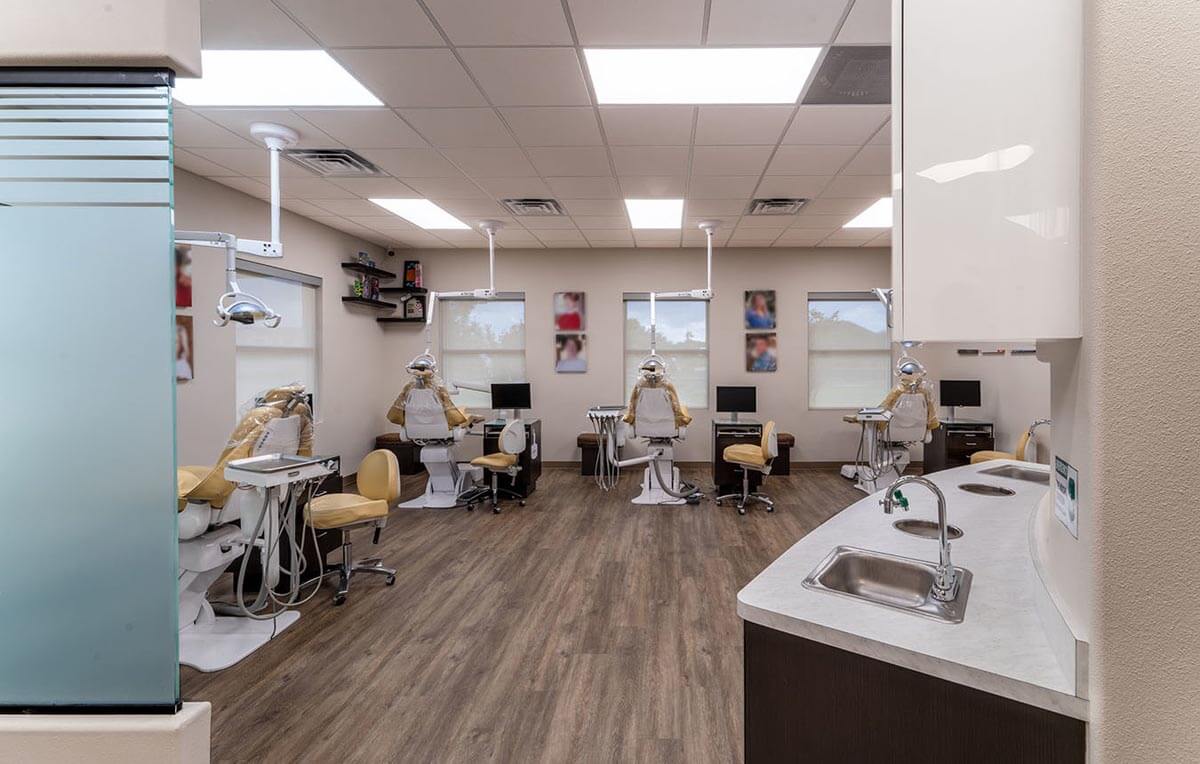
A 3D read of the airway, standard on intake.
Orthodontic problems are frequently downstream of how a patient breathes and sleeps. Screening the airway on the first visit is how those problems get caught while they are still simple to address.
The workup pairs two instruments. The first is a cone-beam CT scan on the ICAT-FLX system — a three-dimensional image of the jaws and the airway captured at a lower radiation dose than a conventional dental series. The second is the American Association of Orthodontists screening questionnaire, which surfaces the sleep and behavioral patterns a single scan can't.
Together they let Dr. Fallah see structure and symptom in the same sitting — the shape of the airway alongside how the patient actually sleeps. Neither alone is enough; the value is in reading them together, every time.
Standard airway workup
Structure, sleep, and behavior are connected.
When the upper or lower jaw develops in a way that narrows the airway, a child's breathing during sleep can be disrupted long before anyone connects it to what they see during the day.
Sleep that is repeatedly interrupted by a compromised airway is not restorative. Over time that shortfall can show up as impaired learning, difficulty regulating emotion, and hyperactivity or inattention — the same pattern often read as ADHD.
A child who is not breathing well at night can present, in the daylight, as a behavior problem. Screening the airway is how a structural cause gets ruled in or out before that assumption hardens. This does not mean an airway issue causes ADHD, or that every restless sleeper has one — it means the airway is worth looking at directly rather than inferring around it.
Signs worth a look
- Snoring, pauses in breathing, or grinding during sleep
- Restless, thrashing sleep — never settles for long
- A history of bedwetting past the expected age
- Daytime fatigue, irritability, or restlessness
- Frequent morning headaches
- Trouble focusing that reads as a behavioral or attention problem
Recognize a few of these? Take the disrupted-sleep screening.

The evaluation is the value.
An honest airway screening has to be willing to reach a conclusion outside orthodontics. When the imaging points to something that isn't ours to treat, the correct step is a referral — not a treatment plan.
Some of what the airway workup surfaces is squarely orthodontic: jaw development that can be guided, arch width that can be expanded, growth that can be directed while it is still underway. Those cases are treated here.
Other findings are not. Enlarged tonsils or adenoids, nasal obstruction, and true obstructive sleep apnea sit with a pediatric ENT or a sleep physician, and when the scan points that direction, Fallah refers out. Catching the problem and routing it to the right specialist is the point of screening every patient — the finding is worth more than the appointment.
09 — Intake
Begin with an evaluation.
Your first visit at NRH Orthodontics is a full evaluation — CBCT airway screening included — and a treatment plan you understand before you commit to anything.
Accepting new patients — North Richland Hills, TX