
Answers, before you ask.
The questions patients most often bring to NRH Orthodontics in North Richland Hills, TX — on the aligner-first model, airway screening, remote monitoring, cost, and timing. Each answer is grounded, not general reassurance.
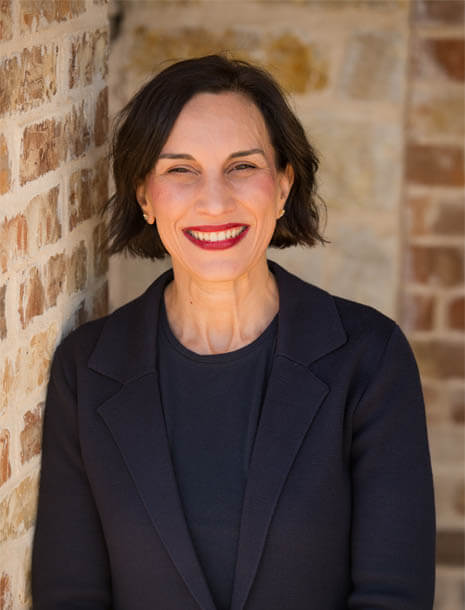
Frequently asked
Select any question to read the full answer. Anything not covered here is worth a short call — the coordinators confirm specifics in writing.
01What does “aligner-first” actually mean?
It means clear aligners are Dr. Fallah's primary treatment tool, not an alternative she offers on request. Many patients arrive after being told their case is too complex for aligners and requires braces. Her clinical model was built specifically for those cases. When a specific tooth movement genuinely needs brackets — an impacted tooth, a severely tipped molar, a limited early-treatment phase — she uses sectional braces as a short, precise step, then transitions back to aligners. Braces are an instrument here, not the default.
02Do you still treat cases with braces?
Yes, when the clinical situation calls for it. We don't want to mislead anyone: braces have a real role for certain movements, and Dr. Fallah uses them as a limited, transitional tool. What we don't do is default every patient to full braces when aligners can achieve the result. If you've been told braces are your only option, a consultation here is worth having.
03Why does every patient get a CBCT airway evaluation?
Since 2020, every patient at NRH Orthodontics receives a low-radiation 3D CBCT scan and an AAO airway-screening questionnaire as part of the standard intake — not as an upsell. Orthodontic problems are often connected to how a patient breathes, sleeps, and develops. Screening the airway lets Dr. Fallah catch structural issues that can be linked to disrupted sleep and behavioral flags in children, and treat with the full picture in view. When imaging shows something beyond the orthodontic scope, she refers to a pediatric ENT — the evaluation is the value.
04How does DentalMonitoring work, and how often will I come in?
You scan your teeth from home with a smartphone attachment, and the results are reviewed personally by Dr. Fallah every week. Because she's watching your progress remotely, in-office visits can be as infrequent as every six months. It's how patients from as far as Houston and Dallas are able to treat with this practice — and Dr. Fallah is accessible seven days a week.
05What makes Dr. Fallah different from other orthodontists nearby?
Dr. Fallah has been a Diplomate of the American Board of Orthodontics since 2007 — the highest voluntary credential in the specialty, held by a minority of licensed orthodontists — and a Harry Sicher Research Award recipient who has taught Invisalign technique at the University of the Pacific. In 22 years of practice, her case mix has run toward the complex: patients told elsewhere that their case couldn't be done in aligners. Board certification here isn't a wall decoration; it reflects the standard of complexity she routinely handles.
06What does treatment cost, and do you take insurance?
Fees depend on the complexity and length of your treatment, and every plan includes CBCT imaging and airway evaluation in the initial workup along with Dr. Fallah's weekly scan reviews. We accept most major PPO orthodontic plans and file claims for you; we do not accept Medicaid. No insurance is required to start — we offer interest-free in-office payment plans and CareCredit, and our coordinators confirm your numbers in writing before anything begins.
07At what age should my child first be seen?
The American Association of Orthodontists recommends a first orthodontic evaluation by age 7. Early evaluation isn't the same as early treatment — most children are simply monitored — but it lets Dr. Fallah catch developing bite, growth, and airway concerns while intervention is simplest. Our early-evaluation visit includes the same CBCT airway screening every patient receives.
08Can I be treated if I live far from North Richland Hills?
Often, yes. Treatment here is paired with DentalMonitoring: you scan your teeth at home with a smartphone attachment, and Dr. Fallah reviews your progress personally every week. Because the review happens remotely, in-office visits can be as infrequent as every six months. It is how patients from as far as Houston and Dallas treat with this practice, and Dr. Fallah is accessible seven days a week.
09What technology is part of a standard visit here?
Two things set the intake apart. Every patient receives a low-radiation 3D CBCT scan and an AAO airway-screening questionnaire as part of a standard workup — not as an upsell. And active treatment is followed with DentalMonitoring, so weekly at-home scans are reviewed by Dr. Fallah rather than screened by software alone. Both are standard, not add-ons.
Still have a question? Request a consultation or call (817) 581-8881.
09 — Intake
Begin with an evaluation.
Your first visit at NRH Orthodontics is a full evaluation — CBCT airway screening included — and a treatment plan you understand before you commit to anything.
Accepting new patients — North Richland Hills, TX