
Orthodontist vs Dentist for Invisalign: What the Training Difference Means
A general dentist can prescribe Invisalign after Align's onboarding course, which takes about six to seven hours. An orthodontist has also finished an accredited residency of at least 24 months and 3,700 scheduled hours. For mild spacing, a trained dentist can be fine; for bite problems, growing kids, or extractions, choose an orthodontist.
· Dr. Basma Fallah
TL;DR
Any licensed dentist can offer Invisalign after Align's onboarding course, about six to seven hours online [1].
An orthodontist has also finished an accredited residency of at least 24 months and 3,700 scheduled hours [2].
Board certification is a separate, optional ABO exam on top of residency, renewed every 10 years [5].
The ABO reports that 68.7 percent of AAO orthodontists are board certified [6].
A general dentist can be a sensible choice for mild spacing or crowding with a healthy bite.
Bite problems, growing children, extractions, and sleep or breathing concerns are where residency training matters most [2].
In Texas, a general dentist who advertises orthodontics must list "General Dentist" after their name [9].
Both can offer Invisalign; the difference is years of supervised specialty training, and your bite decides how much that matters.
Key numbers
Minimum length of an accredited orthodontic residency: 24 months and 3,700 scheduled hours ([2] 2025)
Time to complete Align's on-demand Invisalign onboarding course: About 6 to 7 hours ([1] 2026)
CE hours earned for the on-demand onboarding course: 7 CE hours ([1] 2026)
CE hours for Align's optional live-virtual fundamentals course: Up to 4 CE hours ([1] 2026)
Residency time before an orthodontist can sit the ABO written exam: 18 months ([5] 2026)
ABO certification renewal cycle: Every 10 years ([5] 2026)
Share of AAO orthodontists who are ABO board certified: 68.7 percent ([6] 2026)
Weight of each of the four ABO clinical exam areas: 25 percent each ([5] 2026)
Dr. Basma Fallah, ABO Diplomate since: 2007 ([8] 2026)
Choosing an orthodontist vs dentist for Invisalign comes down to training, since both prescribe the same aligners. Any licensed dentist can offer Invisalign after Align Technology's onboarding course, which takes about six to seven hours online [1]. An orthodontist has also finished at least 24 months of accredited specialty residency [2].
That gap matters more for some cases than others. By the end, you'll know what each credential covers, when a general dentist is a sensible choice, when a specialist is worth the trip, and which questions settle the Invisalign dentist vs orthodontist decision for your own teeth.
Can a Dentist Do Invisalign? What "Invisalign Certified" Actually Means
In short: Yes, any licensed dentist can offer Invisalign after Align's onboarding course, which takes about six to seven hours.
Yes. Any licensed dentist can become an Invisalign provider, and the credential behind the word "certified" is Align's onboarding program [3]. Its on-demand course has three modules, takes about six to seven hours, and earns seven continuing education (CE) hours [1]. Once it's done, the doctor gets a clinical ID number and can start submitting cases [1].
Align offers more after that: a live virtual course worth up to four more CE hours, plus one-on-one coaching on case selection [1]. It also runs ongoing CE courses, so a dentist's aligner training can grow well past the starting course [3]. Orthodontists go through Align onboarding too, in a streamlined version built for specialists [3].
So the certificate tells you a doctor can order Invisalign. It doesn't tell you how much training in tooth movement and bite correction sits underneath it. That training matters because Invisalign doesn't plan itself: Align says every case is created by the doctor treating it [4].
That's where residency comes in. The Commission on Dental Accreditation (CODA) requires an orthodontic residency to run at least 24 months and 3,700 scheduled hours [2]. Residents must also treat all types of malocclusion, the clinical term for a bad bite [2].
About seven hours of onboarding against at least 3,700 scheduled hours of residency is a gap of more than 500 to 1.
Neither number means your dentist can't straighten teeth well. Together, they show why "certified" is the starting line for every provider, and why the training underneath it is the comparison that counts.
Orthodontist vs Dentist for Invisalign: Training Side by Side
In short: Both finish dental school; an orthodontist adds at least 24 months of supervised specialty residency.
Dentist vs orthodontist for Invisalign: training compared
Training after dental school. General dentist offering Invisalign: None required. Orthodontist: Accredited residency, at least 24 months and 3,700 hours [2]. Board certified orthodontist: Same residency [2].
Supervised orthodontic patient care. General dentist offering Invisalign: Optional one-on-one coaching on starter cases [1]. Orthodontist: All types of malocclusion, baby teeth to adult, supervised by orthodontist faculty [2]. Board certified orthodontist: Same residency experience [2].
Invisalign onboarding. General dentist offering Invisalign: About six to seven hour course [1]. Orthodontist: Streamlined specialist version [3]. Board certified orthodontist: Streamlined specialist version [3].
Exam beyond the dental license. General dentist offering Invisalign: None required. Orthodontist: Evaluated throughout residency [2]. Board certified orthodontist: ABO written and clinical exams, renewed every 10 years [5].
What else the office offers. General dentist offering Invisalign: Cleanings, fillings, crowns, one office for routine care. Orthodontist: Braces, aligners, and care for growing jaws. Board certified orthodontist: Braces, aligners, and care for growing jaws.
Every orthodontist starts as a dentist, since accredited residencies admit only dental school graduates [2]. The line that matters most in that table is who checks the work. CODA requires orthodontic residency clinics to be staffed by orthodontists and led by an ABO certified director [2], so every resident's case is supervised by specialists.
Residency also has to build specific skills [2]. Graduates must plan around jaw growth, correct Class II bites without surgery, manage four-premolar extraction cases, and spot sleep-related breathing problems.
A general dentist's path looks different. Align pairs its onboarding with coaching on the first few cases [1], and experience builds from there. For simple alignment, that can be enough. For bite correction, weigh the residency rows.
What a Board Certified Orthodontist Adds
In short: Board certification is an optional ABO exam taken after residency and renewed every 10 years.
Finishing residency makes a dentist an orthodontist. Board certification is a separate step an orthodontist may choose to take through the American Board of Orthodontics (ABO) [5]. The ABO is the national certifying board for the specialty, recognized by the National Commission on Recognition of Dental Specialties and Certifying Boards [5].
The process has two exams. Residents can sit the written exam after 18 months of an accredited program, then take a scenario-based clinical exam once they graduate [5]. The clinical exam weighs four areas equally: diagnosis, treatment planning, managing treatment, and judging outcomes [5]. Certificates are time-limited, and a board-certified orthodontist must renew every 10 years [5].
Certification is common among specialists. The ABO reports that board certified orthodontists make up 68.7 percent of AAO orthodontists [6]. That makes it a fair question for any orthodontist you're considering, and it's easy to confirm on the ABO's public locator [7].
Dr. Basma Fallah, the orthodontist at NRH Orthodontics in North Richland Hills, has been an ABO Diplomate since 2007 [8].
When a General Dentist Is Fine for Invisalign
In short: For mild spacing or crowding with a healthy bite, a dentist who refers out complex cases can be a fine choice.
Sometimes it is. Align lists a dentist and an orthodontist as the two ways to get Invisalign [4], and Texas lets general dentists provide orthodontic care as long as their ads say "General Dentist" [9]. For the right case, staying with the dentist who already knows your mouth makes sense.
Your teeth have mild spacing or crowding, mostly in the front.
Your bite fits together well, with no overbite, underbite, or crossbite to correct.
You're an adult, so jaw growth isn't part of the plan.
Your dentist tells you plainly which cases they refer out, and to whom.
That last point carries the most weight. A dentist who knows where their aligner work stops is a safer pick than one who takes every case. It's also how dentists and orthodontists are meant to work together. Dr. Fallah has taught Invisalign technique to future dentists as adjunct faculty at the University of the Pacific [8], and NRH Orthodontics accepts referrals from dentists and physicians [10].
When an Orthodontist Is the Better Choice
In short: Bite problems, growing children, extractions, and breathing concerns call for an orthodontist's training.
Once Invisalign has to change how your teeth meet, and not only how they line up, specialist training pays off. Residency is built for these situations [2].
Overbite, underbite, crossbite, or open bite: Experience with all types of malocclusion, including non-surgical Class II correction [2]
A child or teen who is still growing: Treatment planning based on normal and abnormal growth [2]
Crowding that may need extractions, or an impacted tooth: Required competence in four-premolar extraction cases [2]
Snoring, mouth breathing, or restless sleep: Training to identify sleep-related breathing disorders [2]
You were told your case needs braces: Training in a variety of recognized orthodontic techniques [2]
Seeing an orthodontist doesn't have to mean braces. NRH Orthodontics runs an aligner-first practice, including for cases other providers said needed traditional braces [11]. When a movement truly calls for brackets, such as an impacted tooth or a badly tipped molar, Dr. Fallah uses sectional braces briefly, then returns to aligners [11]. Every evaluation includes a low-radiation CBCT airway screening, and she reviews each patient's weekly remote scans herself [11].
Questions to Ask Any Invisalign Provider
In short: Ask about residency, board certification, who plans your case, and which cases get referred, then verify.
These six questions work at any consultation.
1. Are you a general dentist or an orthodontist, and did you finish an accredited orthodontic residency [2]?
2. Are you board certified by the American Board of Orthodontics [5]?
3. Who designs my ClinCheck treatment plan, and who reviews my progress [1]?
4. What do my records show about my bite, and not only my front teeth?
5. Which cases do you refer out, and to whom?
6. How will you check my progress between visits, and what happens if my aligners stop fitting?
In Texas, the ad often answers the first question for you. A general dentist who advertises orthodontic services must put "General Dentist" or "General Dentistry" right after their name, in type at least as large as the service names [9]. Terms like "specialist" and "board certified" are limited by a separate rule [12]. To confirm the rest, check the dentist's license and any public board actions on the Texas State Board of Dental Examiners search [13]. Then look up board certification on the ABO locator [7].
Frequently Asked Questions
In short: Short answers on who to choose, cost, referrals, and what provider tiers mean.
Who should do my Invisalign?
It depends on your bite. For mild spacing or crowding in an adult with a healthy bite, an experienced general dentist who refers out complex cases can be a fine choice. For bite problems, growing children, extractions, or a case you were told needs braces, an orthodontist's residency training is built for that work [2].
Is Invisalign cheaper at a dentist or an orthodontist?
Fees vary by office and by case, so compare written estimates for the same treatment plan. At NRH Orthodontics, the fee depends on how complex and how long treatment is, and coordinators confirm every number in writing before treatment starts [11]. Interest-free in-office plans and CareCredit are available [14].
Do I need a referral to see an orthodontist for Invisalign?
Not at NRH Orthodontics. You can call or request a consultation online, and the first visit includes full records and a written treatment plan before you commit [14]. If you plan to use insurance, check whether your plan has its own referral rules.
Does an Invisalign provider tier show a doctor's skill?
A tier shows case activity. Align sets tiers through its Advantage Program, using points earned as treatment plans are accepted, and those points are used only to set the tier [3]. For skill and training, ask about residency and board certification instead [2] [5].
If you're weighing a dentist's Invisalign plan against a specialist's opinion, Dr. Fallah can review your case at NRH Orthodontics in North Richland Hills. Call (817) 581-8881 or request a consultation, and read what patients say about their care before you visit [15].
Key Terms
In short: Plain-English definitions of the terms used above.
Orthodontist: A dentist who has also finished an accredited residency in orthodontics and dentofacial orthopedics [2].
General dentist: A dentist who provides routine care such as cleanings, fillings, and crowns; in Texas their orthodontic ads must say "General Dentist" [9].
Invisalign provider: A dentist or orthodontist who has completed Align Technology's onboarding and can submit Invisalign cases [1].
Orthodontic residency: Specialty training after dental school, at least 24 months and 3,700 scheduled hours in a CODA-accredited program [2].
CODA: The Commission on Dental Accreditation, which sets the standards accredited orthodontic residencies must meet [2].
ABO board certification: An optional credential from the American Board of Orthodontics, earned through written and clinical exams and renewed every 10 years [5].
Diplomate: An orthodontist who holds ABO board certification [8].
Malocclusion: The clinical term for teeth and jaws that don't meet correctly, such as an overbite, underbite, or crossbite [2].
Class II malocclusion: A bite where the upper back teeth sit ahead of the lower back teeth; residents must be able to correct it without surgery [2].
ClinCheck: Align's digital treatment planning software, covered in provider onboarding [1].
Sectional braces: Brackets placed on a few teeth for a short phase when a specific movement needs them [11].
Advantage Program tier: Align's provider level, set from points earned on case activity [3].
At a Glance
In short: Quick reference cards for the practice, the orthodontist, residency, and Invisalign onboarding.
NRH Orthodontics
Location: 8601 Mid Cities Blvd, North Richland Hills, TX 76182 [14]
Phone: (817) 581-8881 [14]
Approach: Aligner-first, with sectional braces only when a movement calls for them [11]
Every evaluation includes: Low-radiation CBCT airway screening [11]
Payment: Interest-free in-office plans, CareCredit, most PPO orthodontic plans [14]
Dr. Basma Fallah
Specialty: Orthodontics and Dentofacial Orthopedics [8]
Board certification: ABO Diplomate since 2007 [8]
Teaching: Adjunct faculty, University of the Pacific, Arthur A. Dugoni School of Dentistry [8]
Monitoring: Reviews each patient's weekly remote scans herself [11]
Orthodontic residency (CODA standards)
Minimum length: 24 months and 3,700 scheduled hours [2]
Case range: All types of malocclusion, primary to adult teeth [2]
Supervision: Orthodontist clinic faculty and an ABO certified program director [2]
Invisalign provider onboarding
Course: On-demand, three modules, about six to seven hours [1]
Credit: Seven CE hours [1]
After the course: Clinical ID number and case submission [1]
Optional extras: Live-virtual course and one-on-one coaching [1]
Sources
In short: The sources behind every numbered citation above.
1. Align Technology. Invisalign provider onboarding: on-demand introductory course (2026). https://www.invisalign.com/provider/become-a-provider/special-markets
2. Commission on Dental Accreditation. Accreditation Standards for Advanced Dental Education Programs in Orthodontics and Dentofacial Orthopedics, Standards 4-1 and 4-3.3 (2025). https://coda.ada.org/-/media/project/ada-organization/ada/coda/files/ortho.pdf
3. Align Technology. Become an Invisalign Provider (2026). https://www.invisalign.com/provider/become-a-provider
4. Align Technology. Where Can I Get Invisalign Aligners? Find a Doctor (2026). https://www.invisalign.com/resources/living-with-invisalign/where-to-get-invisalign
5. American Board of Orthodontics. Become Certified (2026). https://www.americanboardortho.com/orthodontists/become-certified/
6. American Board of Orthodontics. Leading The Way, Together (2026). https://www.americanboardortho.com/about-abo/our-story/leading-the-way-together/
7. American Board of Orthodontics. Orthodontist Locator (2026). https://www.americanboardortho.com/patients/orthodontist-locator/
8. NRH Orthodontics. Dr. Basma Fallah, Board-Certified Orthodontist (2026). https://www.nrhorthodontics.com/about
9. Texas Administrative Code, Title 22, Section 108.55, Advertising for General Dentists (2021). https://www.law.cornell.edu/regulations/texas/22-Tex-Admin-Code-SS-108-55
10. NRH Orthodontics. Refer a Patient (2026). https://www.nrhorthodontics.com/refer
11. NRH Orthodontics. Invisalign in North Richland Hills, TX (2026). https://www.nrhorthodontics.com/services/invisalign
12. Texas Administrative Code, Title 22, Section 108.54, Advertising of Specialties (2021). https://www.law.cornell.edu/regulations/texas/22-Tex-Admin-Code-SS-108-54
13. Texas State Board of Dental Examiners. Public License Search (2026). https://tsbde.texas.gov/resources/public-license-search
14. NRH Orthodontics. Board-Certified Orthodontist in North Richland Hills, TX (2026). https://www.nrhorthodontics.com/
15. NRH Orthodontics. Patient Reviews (2026). https://www.nrhorthodontics.com/about/patient-reviews
09 — Intake
Begin with an evaluation.
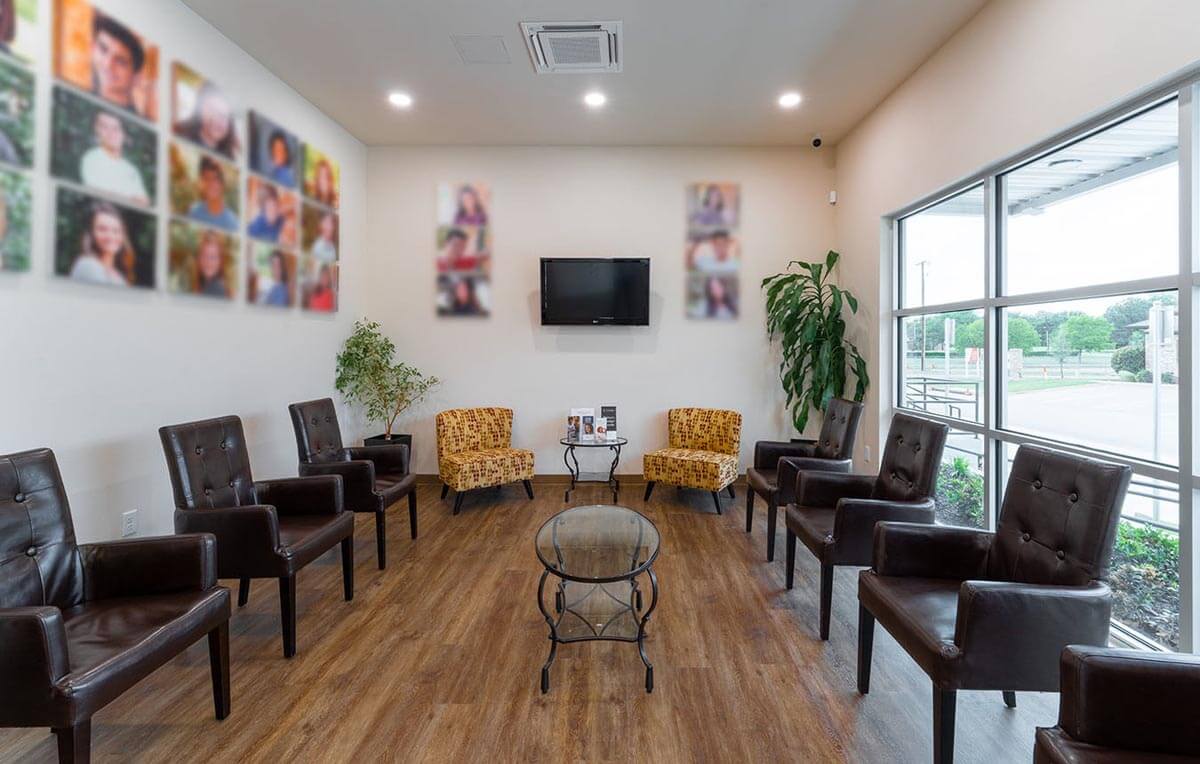
Your first visit at NRH Orthodontics is a full evaluation — CBCT airway screening included — and a treatment plan you understand before you commit to anything.
Accepting new patients — North Richland Hills, TX